Jason Kerzinski
About the Artist
“I started out as a painter, painting with shoe polish and acrylic large-scale portraits based on photos of the deceased that I found while reading obituaries in the Chicago Sun-Times. These paintings were central to my recovery as an alcoholic. The obits gave me a sense of belonging. I was missing human connection in my life. I had felt dormant for so long, and it was as if the portraits I painted were bringing me back to life. Painting gave me a sense of purpose and structure missing in my life. Those paintings were the stepping stones to becoming a photographer. It wasn’t until I reached my thirties when I moved to New Orleans that I began to explore photography. When starting out as a photographer, I was on the lookout for elusive moments. To become a photographer, I thought I had to capture images the way that Henri Cartier-Bresson had done—he was one of the few photographers whose work I was aware of at the time. Cartier-Bresson’s work led me to believe that I had to snap a photo as a moment was unfolding, like that famous reflection image he took of the man jumping over a puddle. As much as I tried, I felt these moments were eluding me and I was chasing phantoms. From my photographer friends, I learned that the art of photography includes a vast array of approaches and methods. I asked myself what I could express that came from inside, and realized that I wanted to go deeper, to speak to people, to feel connected to those around me, to become a portrait photographer. I use a medium format film camera as a way to slow time around me and as a tool to get to know the community around me. I feel like I’m making genuine connections.” – Jason Kerzinski
The Postal Series
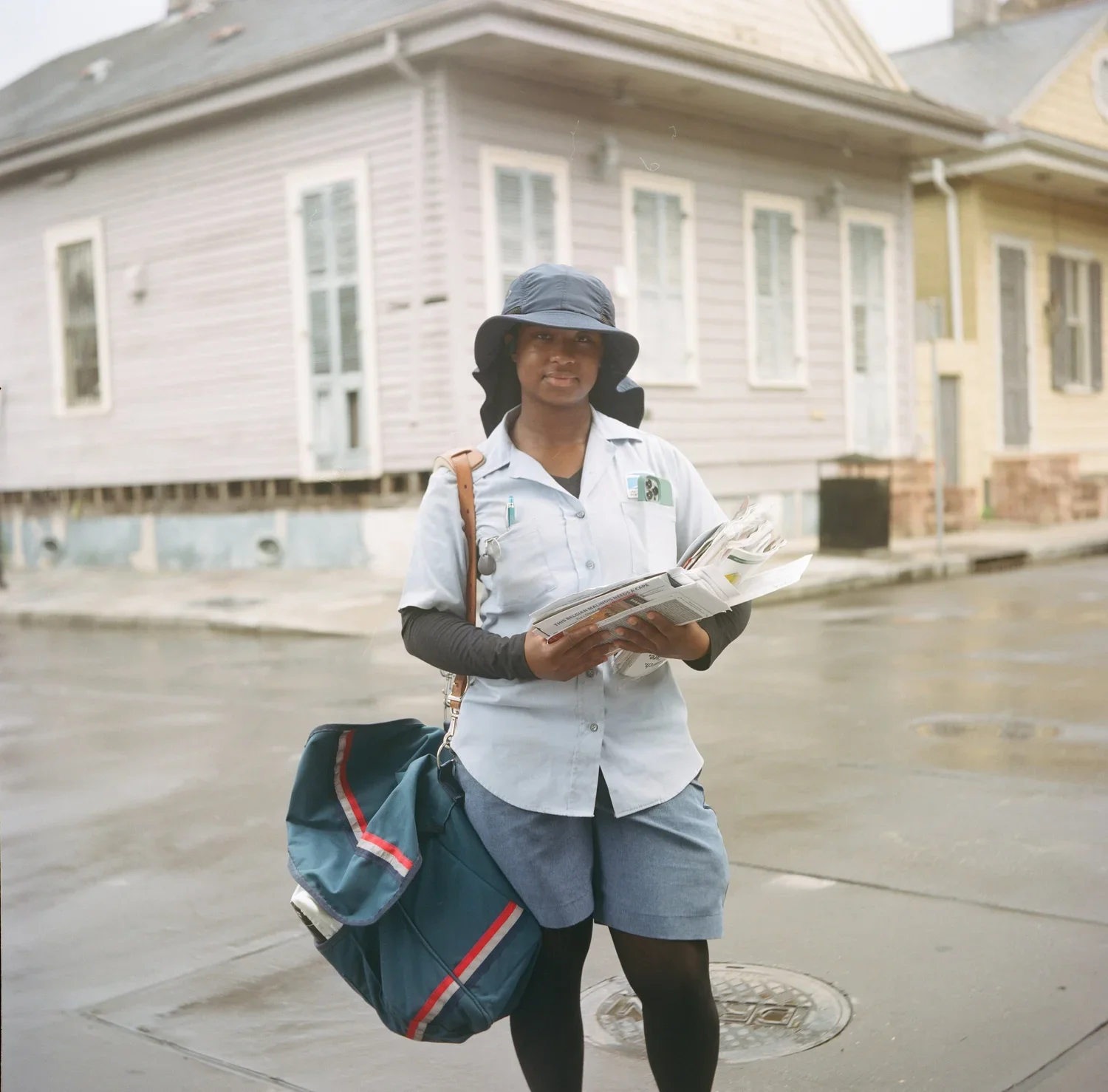
This an ongoing portrait series honoring the working class through the faces of letter carriers in New Orleans. Made along their daily routes, these medium-format portraits place workers within the neighborhoods they serve. This project is an ode to labor, and a quiet dedication. Postal workers move through heat, rain, and repetition, carrying letters, medicine, government checks, and messages between loved ones. Their work is physical, public, and constant. In a time of economic uncertainty and growing automation, their labor remains deeply human. By focusing on presence and dignity, the series insists on seeing the worker as an individual rather than a uniform. These portraits honor the people who sustain our shared infrastructure and affirm the strength, resilience, and humanity of the working-class.